
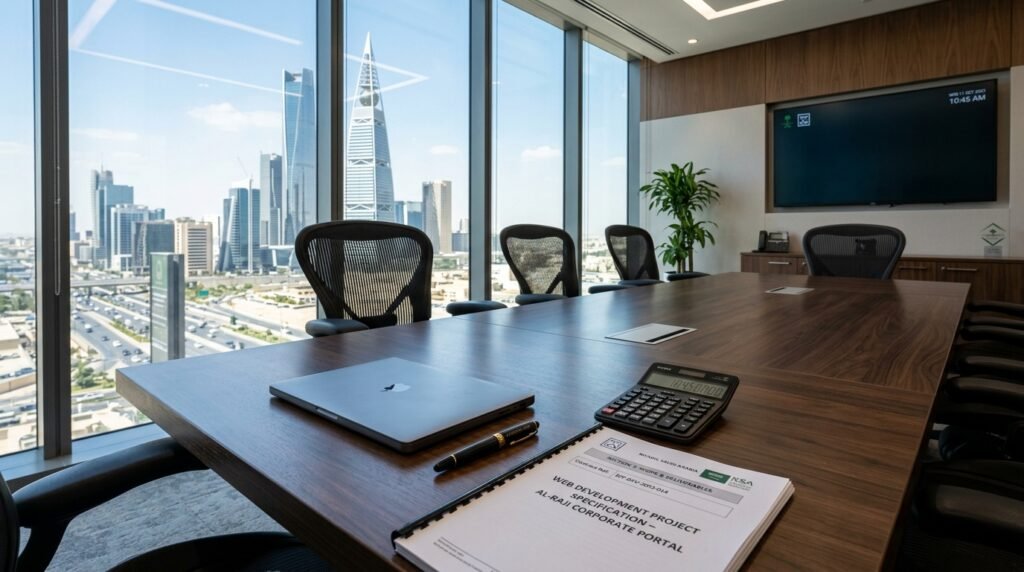
Many business leaders and enterprise decision-makers in Saudi Arabia view the official launch of a corporate portal as the final milestone of their digital investment. In practice, launch day marks the beginning of an ongoing operational lifecycle. Web standards evolve, framework dependencies deprecate older methods, cybersecurity vulnerabilities emerge regularly, and local regulatory requirements demand compliance. Without scheduled, proactive website maintenance in Saudi Arabia, an enterprise platform can gradually suffer from performance degradation, security exposures, and lost business opportunities caused by unmonitored form or checkout disruptions.
This guide explains the foundational principles of website maintenance contracts in Saudi Arabia: core maintenance deliverables, how Service Level Agreements (SLAs) structure response times, estimated market cost benchmarks in Saudi Riyals (SAR), and essential checklist items for selecting an engineering partner.
What Does Post-Launch Website Maintenance Cover?
Professional website maintenance is fundamentally preventative rather than merely reactive disaster response. A structured maintenance scope generally addresses five core operational areas:
1. Proactive Security Patching & Vulnerability Mitigation
Whether built on a content management platform like WordPress or custom frameworks such as Laravel or Next.js, application cores, plugins, and third-party libraries require routine updates. Deferred patching leaves web platforms exposed to common automated vulnerabilities, including SQL injection and cross-site scripting (XSS), which can jeopardize corporate data and business credibility.
2. Offsite Cloud Backups & Staging Restoration Drills
Backup routines are only reliable when their restoration capability is verified. Enterprise maintenance protocols mandate scheduled offsite backups stored in isolated cloud environments. More importantly, technical teams must conduct periodic restoration drills in staging environments to confirm that databases and digital assets can be successfully recovered in the event of an infrastructure failure.
3. Continuous Uptime & Performance Monitoring
Automated synthetic monitoring tools poll server responsiveness continuously. In the event of latency spikes, database locks, or unexpected service interruptions, technical teams are alerted to intervene promptly before search engine bots or prospective customers encounter HTTP 5xx errors.
4. Inquiry Forms, Conversions, and Payment Gateway Checks
For B2B service firms and digital retailers, broken lead channels directly impair revenue. Routine maintenance includes periodic testing of request-for-quotation (RFQ) forms, direct messaging integrations, and Saudi payment gateways (Mada, credit cards, Apple Pay), alongside resolving broken 404 links that impact navigation and search crawlability.
5. Allocated Developer Support Hours
Retainers usually allocate a set pool of monthly engineering hours for routine content updates, corporate announcements, profile updates, and minor layout or browser compatibility refinements.
Comparing Maintenance Retainers: Estimated Saudi Market Benchmarks
Operational complexity and risk profiles vary by website category. The table below outlines estimated market benchmarks observed across digital agencies in Saudi Arabia for 2026 (these figures represent indicative market estimates based on typical scope, excluding VAT, and vary according to server infrastructure and custom development needs):
| Platform Category | Backup Frequency | Core Operational Priorities | Estimated Monthly Retainer in KSA |
|---|---|---|---|
| Corporate B2B Portals | Weekly & before core updates | Form security, SSL renewal, corporate email integrity, PageSpeed | SAR 500 - SAR 1,500 / month (Estimated) |
| E-Commerce Stores | Daily / continuous transactions | Payment gateway uptime, e-invoicing API stability, checkout UX | SAR 1,800 - SAR 4,500 / month (Estimated) |
| Custom Web Applications | Continuous automated replication | Database optimization, cloud server management, API scaling | SAR 5,000 - SAR 12,000+ / month (Scope-dependent) |
Understanding Service Level Agreements (SLAs) & Incident Classification
A professional maintenance contract is formalized through a Service Level Agreement (SLA), which defines expected response and remediation targets categorized by incident severity:
- Critical Incidents (Severity 1): Total platform outage (site down), database failure, or checkout/payment failure on commercial sites. Industry benchmarks for critical retainers target initial response within 30 to 60 minutes with continuous remediation until restored.
- Major Incidents (Severity 2): Significant operational impairment, such as broken contact forms or mobile display errors affecting user experience. Common contractual response targets range from 2 to 4 business hours.
- Minor Requests (Severity 3): Routine text additions, image swaps, or minor styling changes. Typically processed within 24 to 48 business hours, deducted from the monthly engineering hours.
Saudi Regulatory Context: PDPL & ZATCA Compliance Considerations
Website maintenance in the Kingdom intersects with several regulatory standards (note that these technical guidelines do not constitute individualized legal counsel):
- Personal Data Protection Law (PDPL): Enacted by Royal Decree No. (M/19) with regulations overseen by the Saudi Data and AI Authority (SDAIA). The law mandates data security, transparent privacy policies, and responsible handling of user information submitted via website forms.
- ZATCA E-Invoicing Phase 2: For online commerce entities integrated with the Zakat, Tax and Customs Authority, software maintenance must preserve continuous API compatibility to prevent disruption to compliant electronic invoicing.
- Contractor Security Compliance: Industrial vendors servicing major entities like Saudi Aramco and SABIC must maintain secure technical hygiene across their digital assets, a requirement supported through our specialized contractor IT readiness services.
Verification Checklist Before Signing a Maintenance Agreement
To safeguard operational control, verify these contractual provisions:
- Full Code & Data Ownership: Confirm that the contract unequivocally affirms your organization’s complete ownership over source code, media, and database assets without vendor lock-in.
- Documented Backup Recovery: Ensure that backup clauses include verified restoration testing rather than passive file archival.
- Hour Rollover Terms: Clarify whether unused monthly developer hours expire or carry over to the subsequent billing cycle.
- Scope Demarcation: Maintain clear contractual separation between routine maintenance and major redevelopment projects, which are addressed under dedicated website design and development services.
- Licensed Local Partner: Engage with an established, commercially registered entity in Saudi Arabia providing official tax documentation and localized technical communication.
Budgeting Guidelines: The 15-25% Software Lifecycle Benchmark
A recognized software engineering rule-of-thumb suggests budgeting approximately 15% to 25% of the original website development cost annually for routine operational maintenance, technical hygiene, and minor enhancements. For example, a corporate portal developed for SAR 30,000 yields an estimated annual maintenance allocation between SAR 4,500 and SAR 7,500 (roughly SAR 400 to SAR 650 per month). This proactive allocation minimizes the financial impact of unbudgeted emergency remediations and unplanned downtime.
For organizations seeking reliable hosting and technical support, explore our managed cloud web hosting solutions. Al Khowatir Al Jazeera for Digital Solutions provides flexible maintenance retainers and technical support for businesses across the Eastern Province and Saudi Arabia, alongside initial consultations to evaluate your project needs. Contact our technical team to review the most suitable maintenance scope for your platform.
Ready to engineer a high-performance website for your enterprise?
Our engineering team in Al Khobar develops fast, natively bilingual websites and web applications tailored for Saudi business buyers and corporate bids.