
One perk of being a technology analyst is evaluating the latest mobile devices. A few weeks ago, Samsung sent me its latest premium foldable smartphone, the Galaxy Z Fold8 Ultra.
After testing it for several weeks, something occurred to me. In fact, given my two decades as a loyal iPhone user, the learning curve on Android was surprisingly challenging.
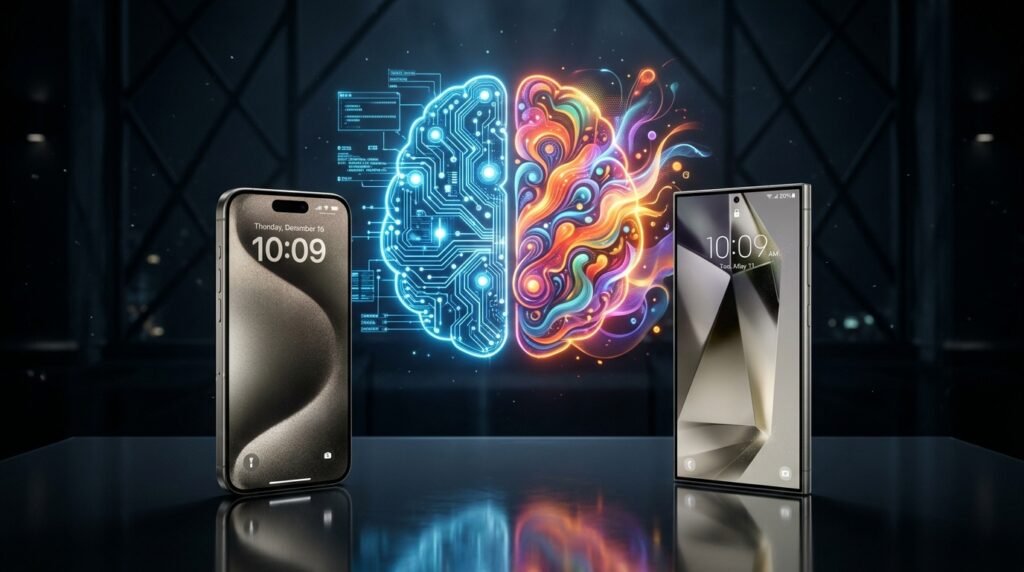
When you talk to longtime smartphone users, you often hear the same firm reactions. For example, people frequently say they could never switch platforms. Many people assume this preference stems from left-brain or right-brain dominance. However, modern neuroscience does not support that theory.
Research has not found evidence that people can be categorized by brain hemisphere dominance. For instance, a major University of Utah study of over 1,000 participants confirmed this reality. Therefore, there is no scientific basis for claiming certain brains are wired for iOS or Android. Instead, user preference is driven by years of learned behavior and digital habit.
iOS and Android Have Trained Us for Two Decades
Apple launched the iPhone in 2007, while commercial Android phones arrived in 2008. Consequently, consumers have spent nearly two decades becoming accustomed to one specific operating system.
That daily repetition matters immensely. Longtime users do not consciously think about navigating their home screens or managing notifications. Their muscle memory takes over automatically. In psychology, this process is known as procedural learning, where repeated behaviors require little conscious thought.
Furthermore, research on technology adoption emphasizes the power of habits and switching costs. Moving to a new mobile platform requires unlearning familiar behaviors. Because of this, longtime users naturally resist changing operating systems.
This reality explains why an experienced iPhone user picking up an Android device can feel disoriented. The Android phone performs the task perfectly well. However, it simply does not match the user’s established expectations.
Familiarity Feels Like Superior Usability
Over the last twenty years, iOS and Android have created distinct interface patterns. Users master specific gestures, control layouts, and notification styles. Over time, these interactions become virtually invisible.
Consider driving a car where the accelerator and brake pedals are suddenly reversed. In theory, the car functions normally. However, your immediate reaction would be intense frustration because your mental model no longer applies.
Ultimately, smartphone loyalty is not about brain wiring. Instead, it reflects deep cognitive habits shaped by years of daily digital interaction-principles that drive modern responsive web design and user experience engineering.
Transform your company’s digital presence into a qualified growth engine
From custom web development and corporate email to local hosting and contractor prequalification readiness, our team in Al Khobar is ready to support your goals.